
14 Essential 4C Hair Products, Tools & Practices for Natural Hair
A real-world guide to the 4C hair essentials that actually matter—perfect for students, young professionals, and anyone on a budget.
You do not need a bathroom full of products to take care of 4C hair.
If you’re in college, working your first real job, raising a family, or simply trying to make your money stretch, natural-hair care can get expensive fast. One product promises moisture. Another promises growth. Another promises to “repair” your curls. Before you know it, you’ve spent $100 and still don’t know why your hair feels dry.
The truth is simpler.
Healthy 4C hair care is less about owning everything and more about having the right tools for cleansing, conditioning, moisturizing, protecting, and gently handling your hair.
Some of these essentials are products. Some are tools. And a couple are habits that can make a bigger difference than another jar of hair butter ever will.
Here are the 14 essentials worth building your routine around.
Protect It While You Sleep

Silk or Satin Bonnet
A satin or silk bonnet is one of the easiest ways to protect your hair while you sleep. Cotton pillowcases can create friction against the hair and absorb some of the products and oils sitting on the strands. A smooth bonnet helps reduce that friction and gives your hair a protected environment overnight. This matters even more when you’ve spent time moisturizing or styling your hair.
Budget move: You don’t need the fanciest bonnet in the beauty supply store. Look for one that stays securely on your head without being painfully tight around your edges.
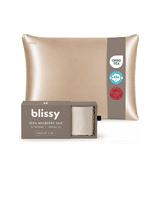
Silk or Satin Pillowcase
Think of a satin pillowcase as your bonnet’s backup plan. Because sometimes the bonnet that was securely attached to your head at 10 p.m. mysteriously ends up halfway across the room by 3 a.m. Human beings have invented satellites, but apparently we still can’t keep a bonnet on overnight.
A satin or silk pillowcase can reduce friction if your hair comes into contact with the pillow while you sleep. You don’t necessarily need both. If you’re working with a tight budget, start with whichever option you’ll actually use consistently.
Clean & Condition

Clarifying Shampoo
Your hair needs moisture, but it also needs to be clean. If you regularly use oils, creams, gels, grease, edge control, or other styling products, buildup can accumulate on the hair and scalp. Hard-water minerals can also contribute to deposits on the hair.
A clarifying shampoo provides a deeper cleanse than your regular moisturizing shampoo and can help remove buildup that ordinary cleansing may not fully address. How often you need it depends on your routine, products, scalp, and water quality. If your hair feels coated, dull, or unusually resistant to absorbing products, that may be a sign your routine needs a better cleansing strategy.
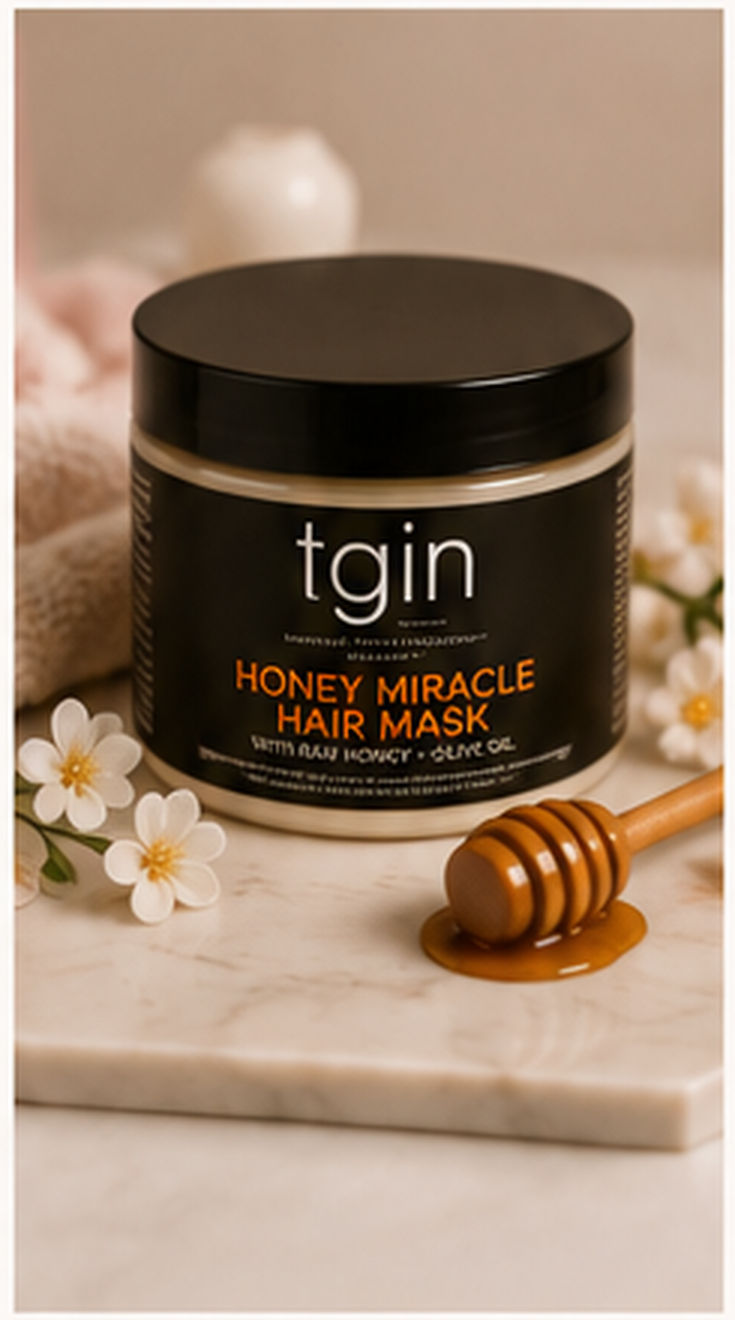
Deep Moisturizing Hair Mask
If your 4C hair constantly feels dry, stiff, or difficult to detangle, a deep-conditioning treatment deserves a place in your routine. A good moisturizing mask can improve softness, manageability, and slip, making the hair easier to work with during wash day.
You don’t need the most expensive mask available. What matters is finding one that gives your hair enough slip and conditioning to make your wash day easier. Look for products marketed around moisture, conditioning, detangling, slip, or dry and damaged hair. Your hair did not attend business school.
Hair Steamer
A hair steamer is a tool, not a requirement. Steam introduces warm moisture around the hair during conditioning, which can make the hair feel softer and help with product application and manageability. This can be especially appealing if you have low-porosity hair and find that products tend to sit on the surface rather than spread easily through your strands.
Here’s the distinction: the steamer isn’t the treatment. Your deep conditioner is the treatment. The steamer is a tool you can use alongside it. If money is tight, this is a later purchase, not a first purchase.
Pre-Shampoo Treatment
A pre-shampoo, or “pre-poo,” is a treatment you apply before shampooing. The purpose is simple: give your hair some extra conditioning and slip before you start manipulating it during the cleansing process. This can be especially helpful if your hair tangles easily or feels rough during washing.
The important part is what happens next: gentler handling. The goal isn’t to create another ten-step routine. It’s to make the step you already have to do — washing your hair — less stressful on your strands.
Keep It Moisturized
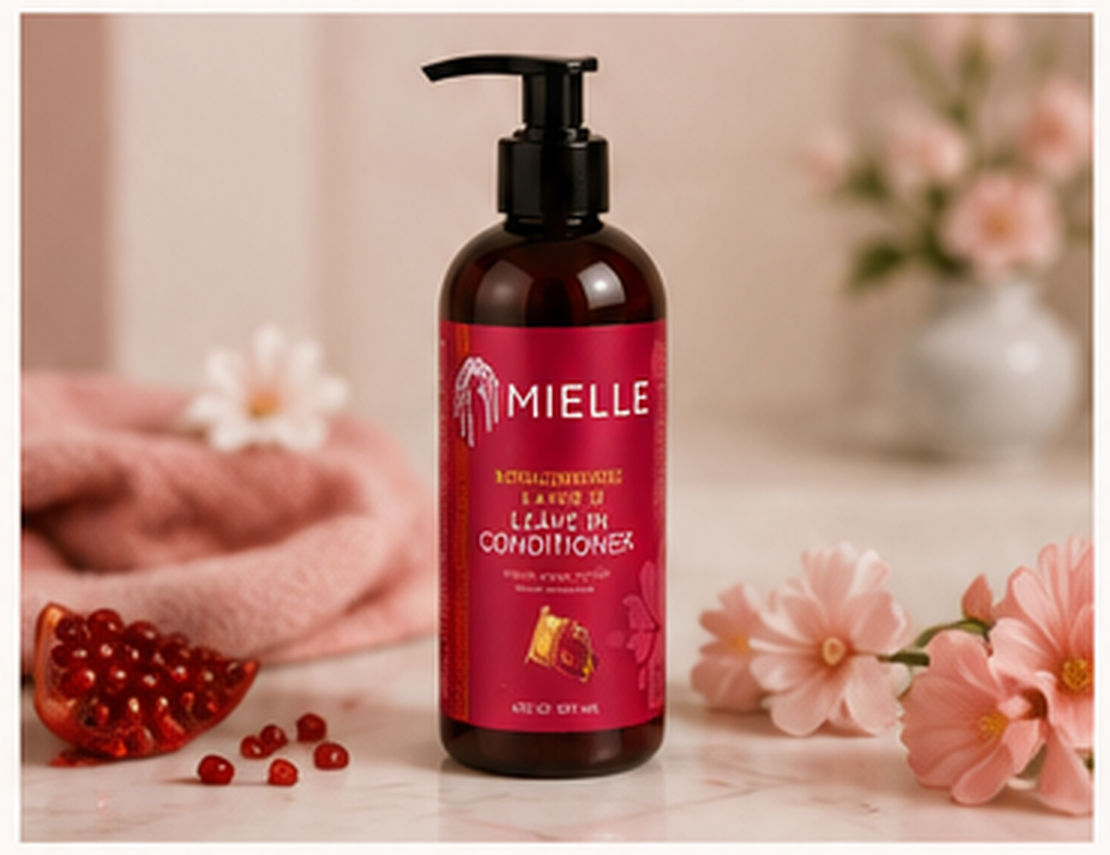
Leave-In Conditioner
A leave-in conditioner is one of the most useful products for maintaining dry 4C hair between wash days. It can provide conditioning, moisture, and slip without requiring you to completely wash your hair again — making it useful when your hair is dry, being restyled, difficult to detangle, or in need of a refresh.
Your leave-in doesn’t have to be expensive. If a $10 product keeps your hair soft and manageable, you don’t need the $30 version sitting beside it just because the packaging looks like it has a trust fund.
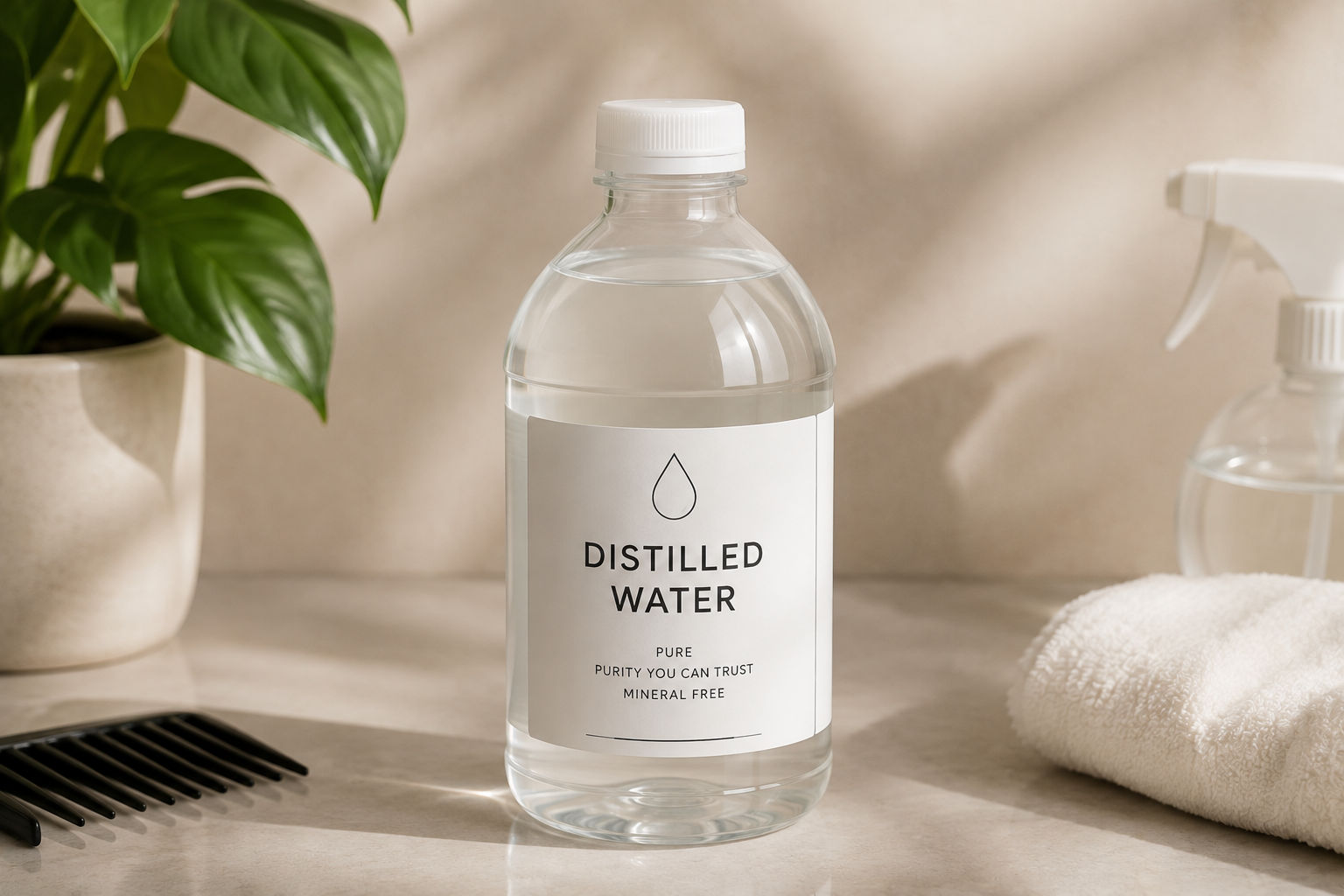
Distilled Water
Water is the primary source of hydration in a moisturizing routine. But tap water isn’t chemically identical everywhere. Depending on your location, it can contain minerals and other substances that affect how your hair and products behave. Distilled water has been purified to remove minerals and impurities — making it useful for a DIY moisture mist or diluting certain water-based products.
But don’t turn distilled water into a religion. If your regular water works well for your hair, you don’t automatically need to replace it.
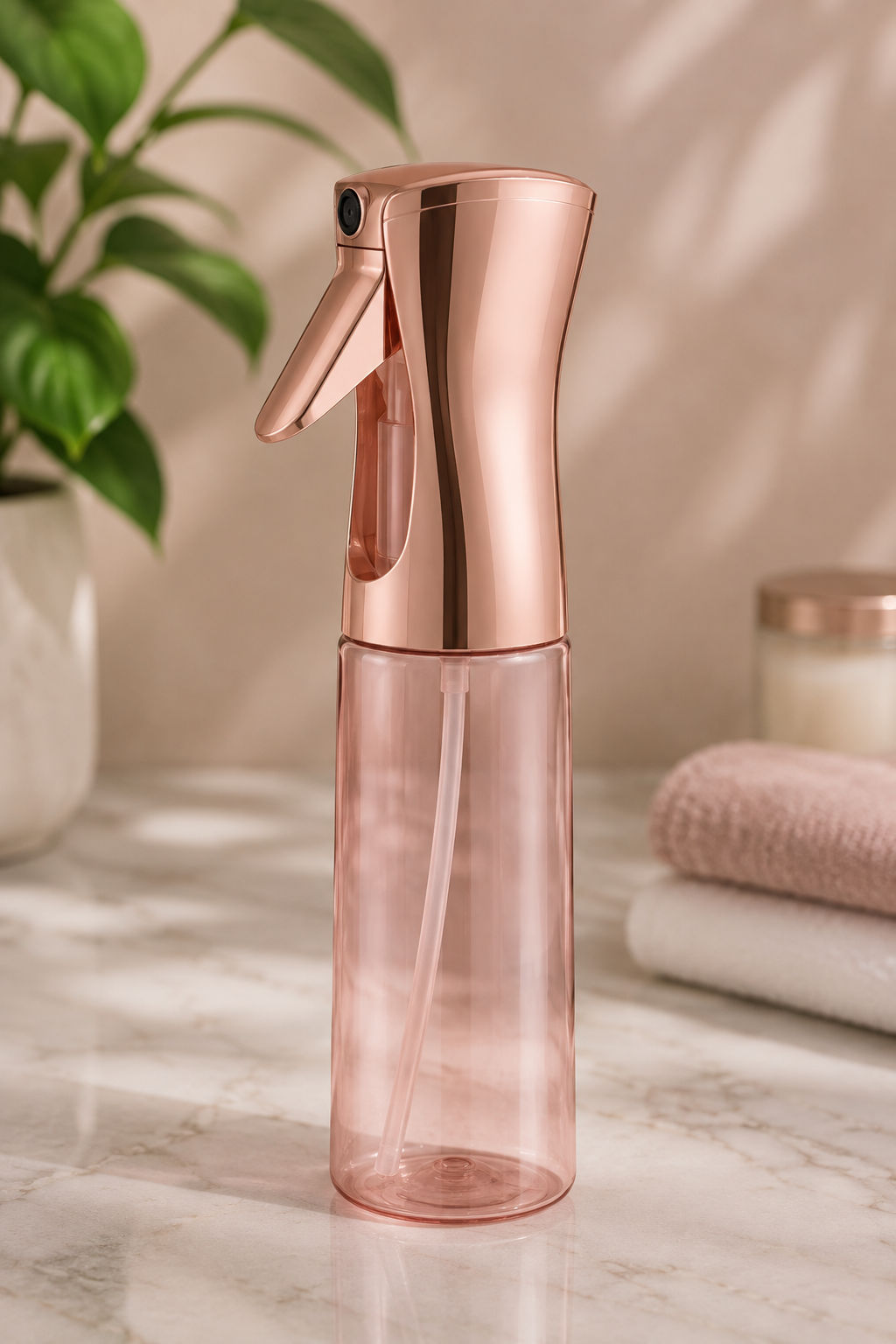
Continuous Mist Spray Bottle
A continuous mist bottle is one of those inexpensive tools that can make natural-hair maintenance much easier. Instead of dumping water onto your hair, it distributes a fine mist more evenly — useful for refreshing dry hair, rehydrating twists, dampening hair before detangling, or applying water before a leave-in.
Water first. Product second. That simple change can make your moisturizing routine much easier to control.
Blue Magic Hair Dress
Blue Magic is a classic example of an old-school product that still has a place in some natural-hair routines. Its petroleum-based formula creates an occlusive layer over the hair — it can help slow moisture loss after you’ve hydrated your hair. That’s important because sealing is not the same thing as moisturizing.
Think of your routine like this: water or water-based product → leave-in → sealant. For some people with very dry, dense, or high-porosity hair, a heavier sealant can be useful. For others, it may feel too heavy. The goal is to figure out whether your hair responds well to it.
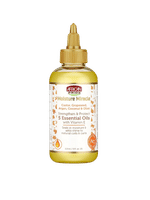
Nourishing Hair Oils
Hair oils can be useful, but they are frequently given responsibilities they don’t actually have. Oil doesn’t replace water. Certain oils can help lubricate the hair, reduce friction, add shine, and help slow moisture loss when used as part of a moisturizing routine. Jojoba, argan, and castor oil are examples you’ll see frequently in natural-hair care.
You don’t need five different oils. Start with one your hair likes. If your hair feels greasy, heavy, or coated after using it, you may simply be using too much. More product isn’t automatically more moisture.
Prevent Unnecessary Damage
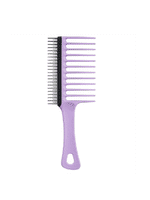
Wide-Tooth Comb
4C hair doesn’t need to be treated like it’s fragile glass. But it does need to be handled with intention. A wide-tooth comb gives you more space between the teeth, which can make it easier to move through dense, tightly coiled hair.
The bigger issue isn’t simply the comb — it’s how you use it. Don’t attack a tangled section from the roots. Start with your fingers or the ends, work in manageable sections, add enough conditioner or leave-in for slip, and gradually work through the tangles. If the comb keeps getting stuck? Stop pulling. Your hair is not a lawn mower.
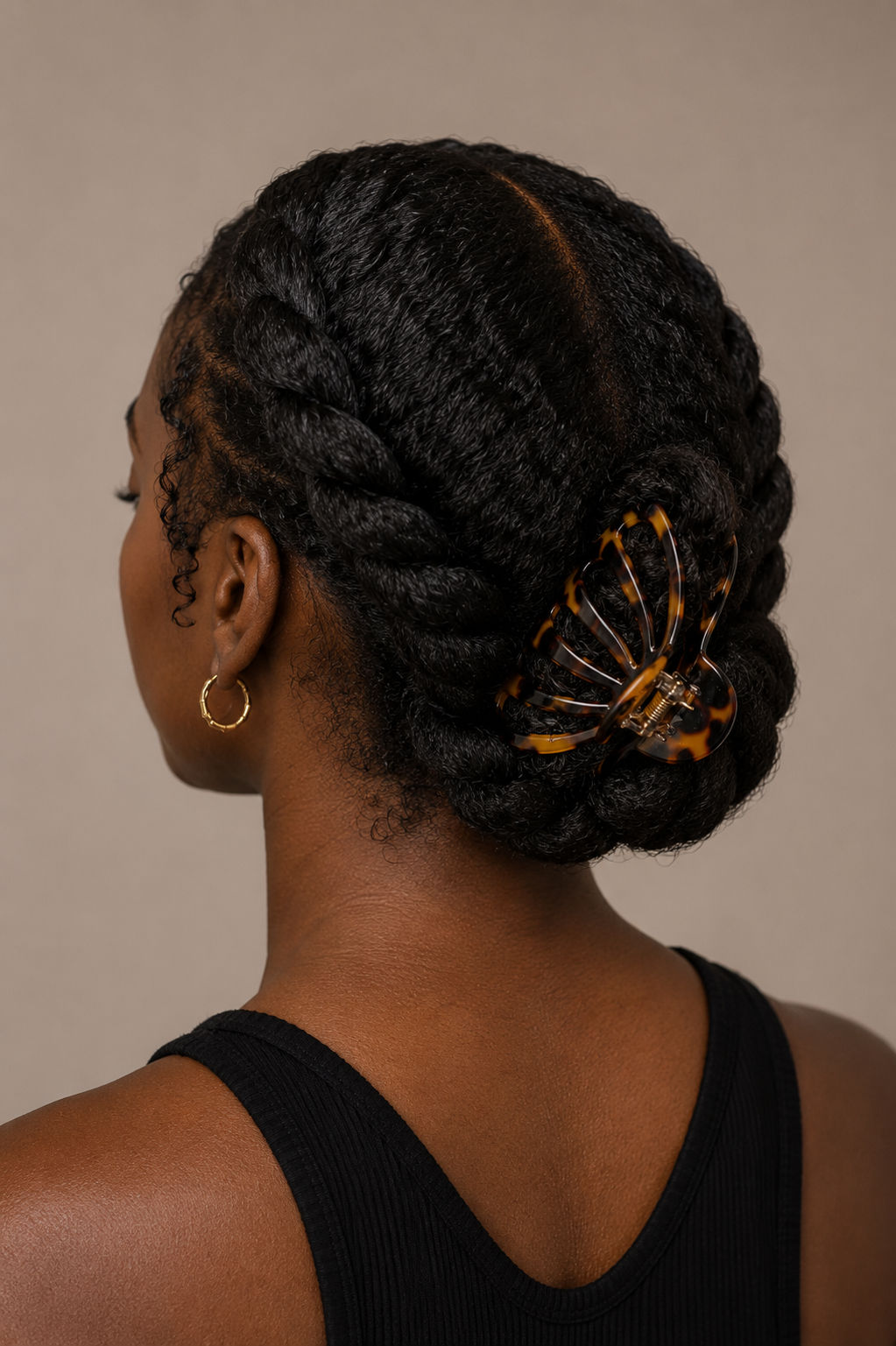
Low-Tension Protective Styling
Protective styling can reduce daily manipulation and help keep your ends tucked away, but the style itself isn’t automatically protective. A style that is painfully tight around your edges or constantly pulling on your scalp isn’t protecting much.
Low-tension styles such as loose twists or appropriately installed braids can be useful when they’re comfortable and maintained properly. Your edges are part of your hair too. If a style hurts when it’s installed, gives you a headache, or leaves your scalp feeling painfully tight, that’s not a badge of honor. That’s information.
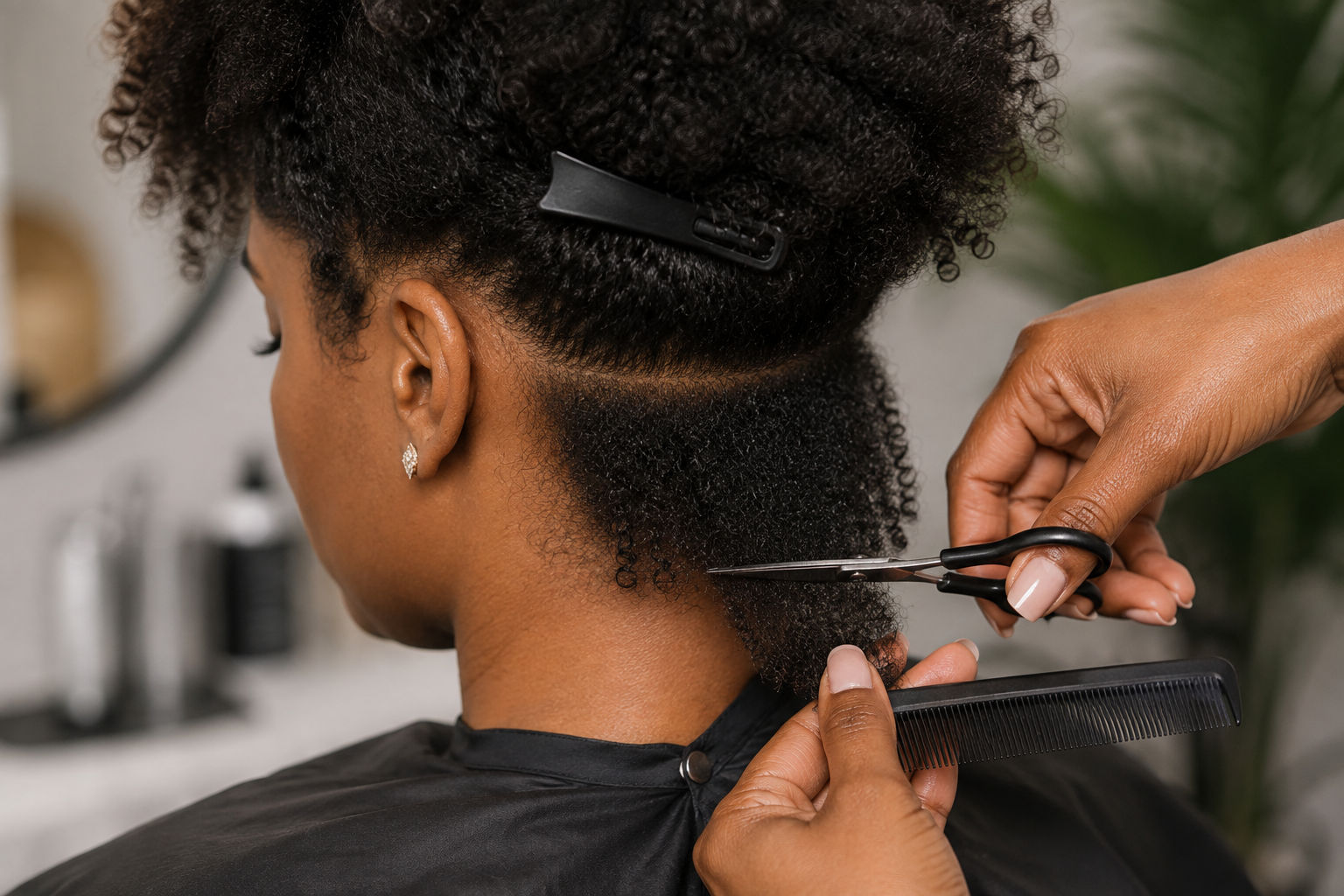
Regular End Trims
Technically, you don’t buy this one. You schedule it. Regular trims can help remove split or damaged ends and keep the ends of your hair more manageable.
Here’s the part that gets misunderstood: trimming doesn’t make your hair grow faster. Your hair grows from the scalp. The purpose of trimming is to manage damaged ends so you’re not trying to preserve length that is already splitting, knotting, or breaking. How often you need a trim depends on your hair, styling habits, heat use, and the condition of your ends.
If You’re On a Budget, Start Here
You do not need to buy all 14 things at once. If you’re a college student, working your first job, or simply trying to make your paycheck survive until the next one, start with the basics.
Your first five:
- Leave-in conditioner — For maintaining moisture and manageability.
- Deep conditioner or moisturizing mask — For conditioning during wash day.
- Shampoo — For keeping your scalp and hair clean.
- Satin bonnet — For reducing nighttime friction.
- Continuous mist bottle — For making moisture refreshes easier.
Then build from there. A clarifying shampoo can come next if buildup is an issue. A pre-poo can be added if detangling is difficult. Oils or a heavier sealant can come into the routine if your hair responds well to them. A steamer? That’s a nice-to-have, not a natural-hair emergency.
The Real 4C Hair Essentials
There is a temptation with natural hair to keep searching for the product that finally “fixes” everything. But your hair isn’t a problem that needs fixing. You need to understand what it needs.
Clean it. Condition it. Add moisture. Handle it gently. Protect it. Pay attention to how it responds.
Your 4C hair may need more moisture than your friend’s. You may prefer a light leave-in while someone else loves a heavier cream. You may love Blue Magic. Someone else may hate the way it feels. That’s normal.
Hair type can tell you something about your curl pattern, but it doesn’t tell you your entire hair-care routine. Porosity, density, damage, styling habits, environment, water quality, and product choices all matter too.
So don’t build your routine around what somebody else’s 4C hair looks like on TikTok. Build it around what your own hair is telling you.
And if you’re on a budget, remember the most important rule of all: you don’t need more products. You need the right routine.
Love your hair. Protect your peace. ♥